Lectionary: Sundays and Festivals
The Revised Common Lectionary
The Revised Common Lectionary (RCL) provides a three-year plan for Sunday readings starting with the season of Advent, four weeks before Christmas day. For each Sunday and festival, four readings are suggested and include: a Gospel reading, an Old Testament reading, a reading from the Psalms, and a New Testament reading. The RCL is a work of The Consultation on Common Texts, an ecumenical consultation of liturgical scholars and denominational representatives from the United States and Canada who produce liturgical texts for use in common by North American Christian Churches.
Each year of the RCL centers on one of the synoptic Gospels (Year A – Matthew, Year B – Mark, Year C – Luke). John is read in each year in the major seasons of Christmas, Lent, and Easter.
For much of the year, the Old Testament lesson is closely related to the Gospel reading. However, from the first Sunday after Trinity Sunday to the end of the church year, two provisions have been made: a continuation of the complimentary readings or a semicontinuous pattern of Old Testament readings.
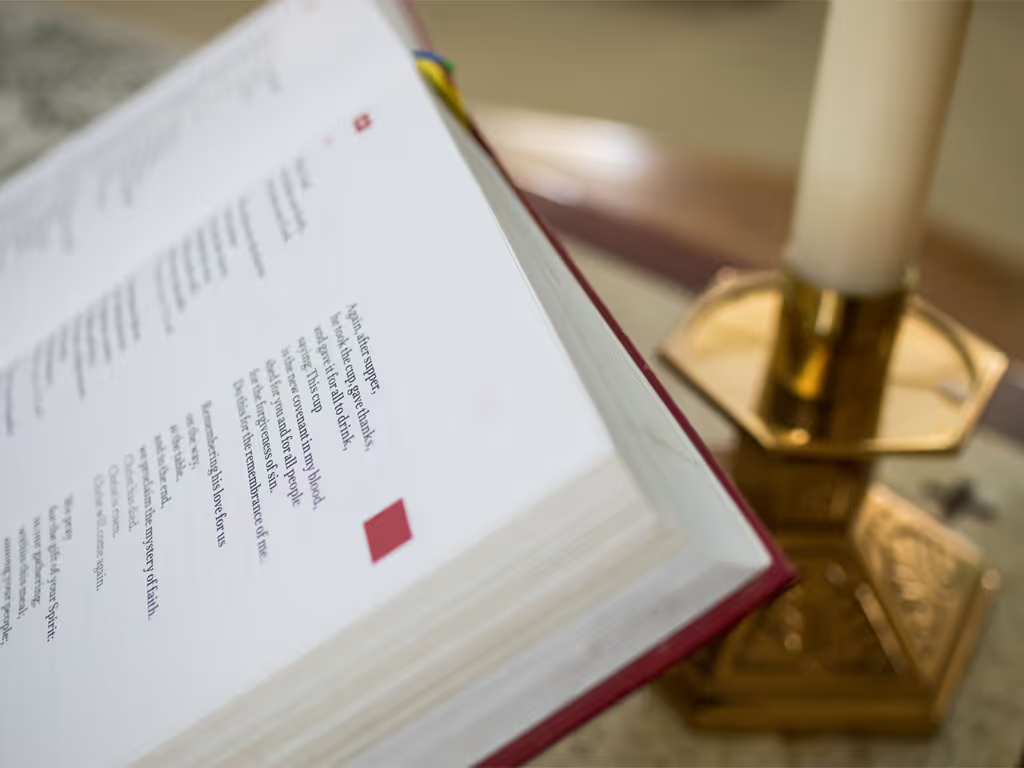
The public reading of the Holy Scriptures is an indispensable part of worship, constituting the basis for the public proclamation of the Gospel
- Use of the Means of Grace, principle 7
Please note that dates for the Year Cycles are available approximately 9 months
before first date of the new cycle.
Year A
Year A focuses on the gospel of Matthew. The semicontinuous Old Testament readings focus on major Genesis narratives, the covenant with Moses, and the establishment of Israel in the promised land. The second, New Testament, readings are from Romans, Philippians, and 1 Thessalonians.
Year B focuses on the gospel of Mark with more selections from the gospel of John than any other year. The semicontinuous readings from the Old Testament focus on the covenant of David and Wisdom literature. The second, New Testament, readings are from 1 and 2 Corinthians, Ephesians, James, and Hebrews.
Year C focuses on the gospel of Luke. The semicontinuous Old Testament readings are of prophetic proclamation chosen in chronological order and highlighting Jeremiah. The second, New Testament, readings are chosen mainly from Galatians, Colossians, 1 and 2 Timothy, and 2 Thessalonians.
Numbering system for the time after Pentecost
The lectionaries that preceded the RCL used a variety of numbering systems for the weeks after Epiphany and Pentecost sometimes called “ordinary time.” The RCL suggests two systems: the Arabic lectionary number or the calendar date range for the set of readings. Conversion charts are available to help you negotiate these various numbering systems.
Conversion Chart for the Time after Pentecost Year A 2014
, Year B 2012
, and Year C 2013
.
Other Resources
A Three-Year Banquet by Gail Ramshaw (Augsburg Fortress, 2004) invites the entire worshiping assembly, lay and clergy, to understand and delight in the three-year lectionary. The study guide explains how the Revised Common Lectionary was developed and how the gospels, the first readings and the epistles are assigned. Further chapters describe many ways that the three readings affect the assembly's worship and the assembly itself. Like food at a banquet, the fare we enjoy in the lectionary nourishes us year after year. Purchase from Augsburg Fortress.