How often should a congregation celebrate Holy Communion?

 
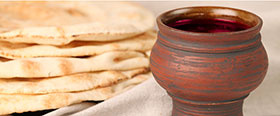
A congregation with an ordained pastor should celebrate Holy Communion every Sunday. Celebrations are also appropriate on other occasions: Saturday evening preparation for Sunday, festivals and lesser festivals, midweek services, the Christian marriage and the burial of the dead, and other occasions on which the congregation assembles.

The Use of the Means of Grace: A Statement on the Practice of Word and Sacrament 

states this principle clearly:

Principle 35
                                
According to the Apology of the Augsburg Confession, Lutheran congregations celebrate the Holy Communion every Sunday and festival. This confession remains the norm for our practice.
Application 35A The Church celebrates the Holy Communion frequently because the Church needs the sacrament, the means by which the Church’s fellowship is established and its mission as the baptized people of God is nourished and sustained. This practice was reaffirmed in 1989 by the Evangelical Lutheran Church in America. We continue to need "consistent pastoral encouragement and instruction relating to Holy Communion . . . pointing up Christ’s command, his promise, and our deep need." For a variety of historical reasons, Lutherans in various places moved away from the weekly celebration of the sacrament.
Application 35B All of our congregations are encouraged to celebrate the Lord’s Supper weekly, but not every service need be a Eucharist.
Application 35C Participation in the sacramental meal is by invitation, not demand. The members of this church are encouraged to make the sacrament a frequent rather than an occasional part of their lives.

The basic pattern of Christian worship is a weekly pattern: from Sunday to Sunday. Even before all Christians could agree on when to celebrate Easter, this weekly pattern was in place. From its earliest days, the community of Christians was described as people who gathered "on the first day of the week." This gathering on the first day of the week was not a matter of convenience; this was a workday in the ancient world. Rather, it was a witness to the community itself and its surrounding culture to the resurrection of Jesus from the dead on the first day of the week. This celebration involved doing what Christ had asked of his disciples at the Last supper: "do this in memory of me." In the second century Justin Martyr described the weekly liturgy of Christians:

On the day named after the sun, all who live in the city or countryside assemble in the same place, and the memoirs of the apostles or the writings of the prophets are read for as long as time allows. When the lector has finished, the president addresses us, admonishing us and exhorting us to imitate the splendid things we have heard. Then we all stand and pray and, as we said earlier, when we have finished praying, bread, wine and water are brought up. The president offers prayers of thanksgiving, according to his ability, and the people give their assent with an "Amen."

Next, the gifts over which the thanksgiving has been spoken are distributed, and each one shares in them, while they are also sent via the deacons to the absent brethren. —Apology of Justin Martyr (ca. 150)

In Luther’s day, too, the basic celebration in every parish was mass (Holy Communion) on Sunday. Other services (morning and evening prayer on a daily basis, daily mass, processions, and so forth) were also celebrated in congregations which had the resources to do so. At the time of the Reformation, Luther and the Reformers continued the practice they knew of celebrating Holy Communion every Sunday.

The question of how often a congregation celebrates Holy Communion is not the same question as how often an individual baptized Christian should receive the sacrament. In Luther’s day, many people felt unworthy to come to receive Holy Communion even though they were attending mass every Sunday or even every day. The thrust of Luther’s preaching and catechetical writing often focused precisely on this issue of how to encourage those attending the public celebration of Holy Communion to participate in the fullest possible way by hearing the Word, read and preached, singing the praise of God, joining in the prayers, and receiving Holy Communion.

We should so preach that, of their own accord and without any law, the people will desire the Sacrament and, as it were, compel us pastors to administer it to them" (Preface to The Small Catechism). "Suppose you say, `What shall I do if I cannot feel this need or experience hunger and thirst for the Sacrament?’ Answer for persons in such a state of mind that they cannot feel it, I know of no better advice than to suggest that they put their hands to their bosom and ask whether they are made of flesh and blood. . . . (The Large Catechism 5:75).

Congregations of the Evangelical Lutheran Church in America are moving steadily to more frequent celebrations of Holy Communion. Current figures from congregational reports indicate that the monthly pattern of celebration is now in the minority among congregations. Weekly celebration or celebration every second week with additional celebrations on festivals is now the majority pattern.

Continued emphasis, teaching and encouragement is called for if the church is to carry through on its stated commitment to celebrate the Holy Communion each Sunday in its congregations.

In brief, it may be said that the arguments for this recovery of the weekly Sunday Eucharist are based in scriptural, confessional and historical warrants (the church of the New Testament and of the Confessions is a church of weekly Eucharist), liturgical meaning and pastoral need (the weekly assembly is most clearly centered when it is an assembly for the Word and Sacrament), and theological integrity (the weekly assembly continues to have to do with Jesus when it has to do with this Meal). The argument is that the Lord’s Day, the ancient day of the Eucharist, the day of liturgical centering for the assembly, the day of the remembrance of Jesus in assembly, is the day for the Lord’s Supper. Lord’s Day and Lord’s Supper ought to be inseparably linked for us. (Gordon Lathrop, "Toward doing the confession")

We have been given the special promise of Christ’s presence in Word and Sacrament. The times in which we live now pose the urgent pastoral question, Why we should not act on this promise to keep Christ at the center of our Sunday assemblies? No ideology, project, theme or other emphasis should ever be allowed to move Christ from the center. The societal supports we could once take for granted are rapidly passing away in favor of a non-Christian or post-Christian context for daily life and work. What better foundation on which to build and to reorganize our personal lives of faith and our assemblies together for worship around than Christ–-really present–-in Word and Sacrament each week!

Other assemblies on Sunday, before or after the congregation’s celebration of Holy Communion, and assemblies on other days of the week should also draw from the riches of Christian patterns of daily prayer, preaching, and so forth. The liturgy for Holy Communion is not the only way that Christians worship God. When no ordained pastor is available to preside, the congregation will need to use one of these other forms of worship. Centering our life together on the Lord’s supper each Lord’s Day is the foundation for growth.

 Resources