
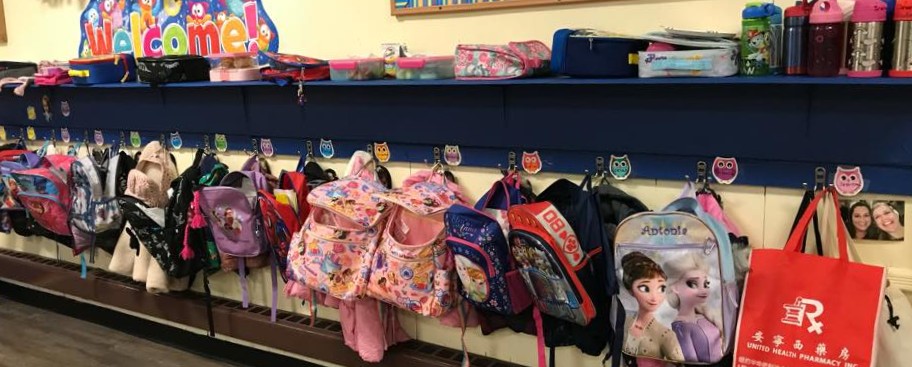
Tucked away on the residential streets of Dyker Heights, you’ll find a place that many young families in the neighborhood know well. Redeemer St. John’s Lutheran Church is one of the few early childhood education providers in the Brooklyn neighborhood and has nourished young children for over 50 years. The church has a much smaller membership than in the 1970s and limited space, yet its halls ring with the sounds of full pre-K and 3-K classrooms every weekday. Redeemer St. John’s is one of the many churches in New York City that is partnering with the Department of Education in the ambitious (and highly successful) universal pre-K initiative, which is made possible only through religious institutions and municipal agencies working together.
Twelve years ago, when the Rev. Khader Khalilia first came to the church, he found a child care ministry that was on its last legs. Only a handful of children were enrolled in the Redeemer St. John’s Nursery School, and the church was burning through resources to staff a program that was steadily shrinking into oblivion. The school was Redeemer St. John’s longest running and most beloved mission in the neighborhood. The congregation had a heart for early childhood education and prided themselves on providing a place where young children could gain core social, emotional and spiritual foundations before entering kindergarten. After a difficult period of discernment for the congregation council and nursery school board, Redeemer St. John’s decided to hold out for two more years in case of a miracle.
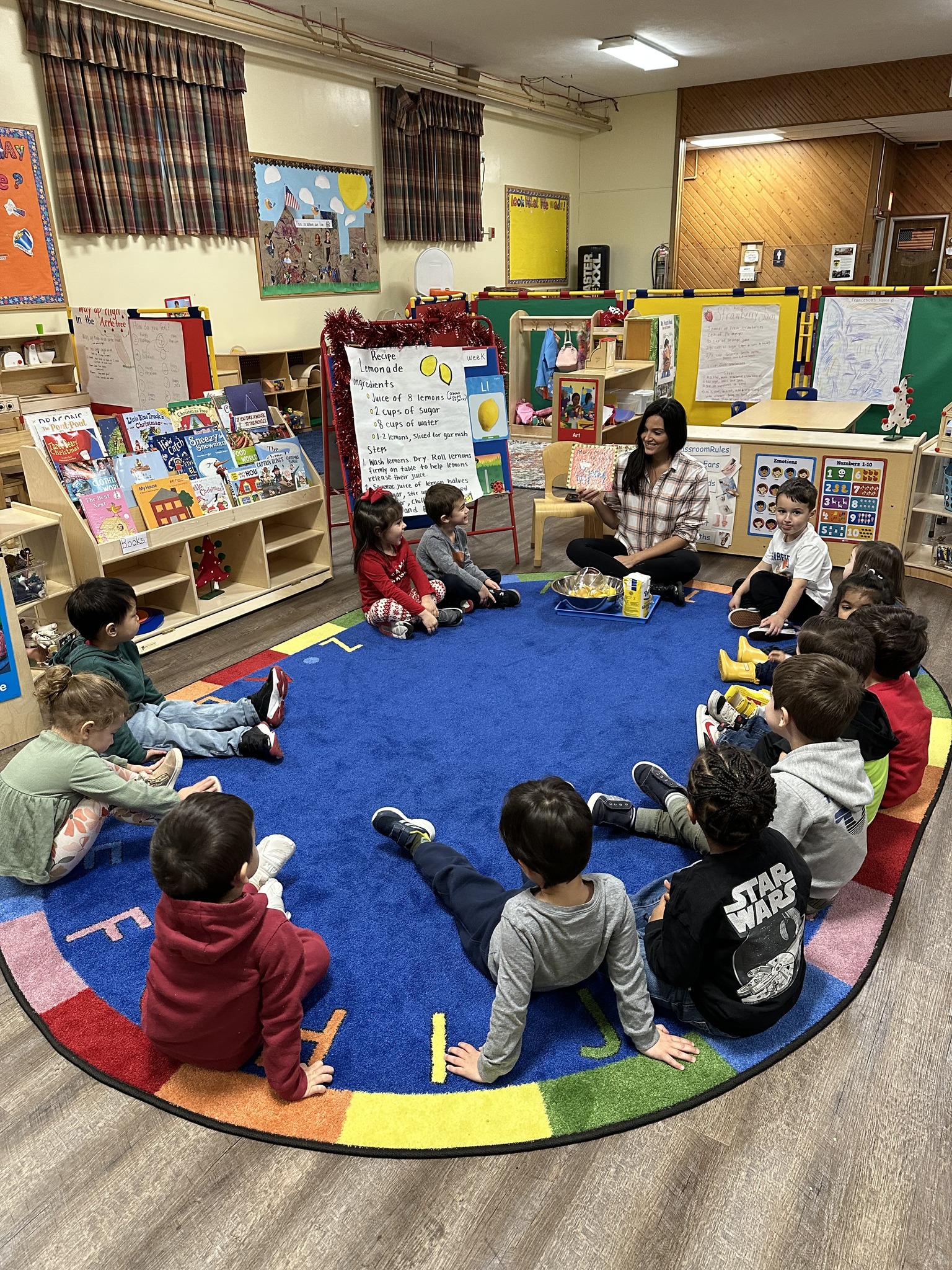
That miracle came in the form of then-mayor Bill de Blasio’s election in 2014, which he won on a platform of providing universal pre-K for all New York City residents. De Blasio committed to getting the program up and running by fall 2016, which meant the city had to find space for about 73,000 children in less than two years. It wasn’t feasible for the city to acquire or build that amount of space in such a short period, so leaders began recruiting faith-based child care providers for public-private partnerships. The city would provide funding, enrollment support and help with capital improvements, and the existing programs would need to adapt some of their programming to the city’s expectations for high-quality preschool education and its regulations for managing pre-K programs. The city was especially focused on finding partners in neighborhoods that did not already have affordable or publicly funded pre-K options — neighborhoods like Dyker Heights.
When Pastor Khalilia first heard about the opportunity, he called an emergency meeting of the nursery school board and congregation council. The school’s director was wary, and the board felt there were too many unknowns. Nonetheless, Pastor Khalilia completed the application to become a universal pre-K site. “The Department of Education was desperate to open a pre-K program in Dyker Heights,” he said. “It would have been a mistake to not even apply.”
When the approval came through, Pastor Khalilia presented the city’s offer to the school board and council: $35,0000 for building renovations and enough funding to keep the program afloat for the foreseeable future — an offer too good to refuse.
In addition to now being fully funded for staff, the nursery school uses the universal pre-K funding to make a significant contribution to Redeemer St. John’s in the form of a lease payment, which has stabilized church finances by covering the majority of occupancy costs.
While the additional financial support has been welcome, the most significant gain for the church has been a new way to connect with its neighborhood. Dyker Heights residents enrolled in the pre-K program probably wouldn’t have sought out a Lutheran-led early childhood education program on their own, so the partnership has brought a diverse array of families and children into the church. Parents who don’t have a church home ask Pastor Khalilia to baptize their children, officiate funerals or provide pastoral care. Some parents are local business owners and community leaders, and they connect Redeemer St. John’s to the wider neighborhood’s needs, hopes and worries. The congregation works with the preschool to host special events, inviting parents to learn more about the church. “There are a few opportunities for families to come to the church on a Sunday” Pastor Khalilia said. “Some come back; some join.”
Parents know Pastor Khalilia almost as well as they know Holly Hooper, the preschool director, who has been with the school since it became a universal pre-K site. She works closely with Pastor Khalilia to ensure that the congregation continues to see the preschool as a source of missional outreach and as a mutually beneficial partner.

The preschool’s success has put some constraints on the congregation. Because the church building is small, the fellowship hall, which has the only bathrooms in the building, doubles as a classroom. “Whenever there’s a weekday church meeting, they have to ask for permission to come through the class and use the restroom,” Hooper said. “And if it’s during naptime, they just have to wait.”
Hooper also makes sure that the capital funding the preschool receives benefits the church too. During the COVID-19 pandemic, the school was awarded a state grant to build a new playground. “We built the playground with both the church and school in mind,” she said. The preschool has also been able to leverage funding to fix groundwater leaks, repair the roof and address other key maintenance issues.
Despite recent funding cuts, universal pre-K in New York City continues to be one of the most popular public programs in the city. Churches like Redeemer St. John’s have played a vital role in offering free, high-quality child care to millions of families across the five boroughs. Ten years after becoming a universal pre-K site, Redeemer St. John’s Nursery School is thriving and so is the congregation.
“Revitalization of one mission ends up revitalizing all mission.”
- Rev. Khader Khalilia
Redeemer St. John’s has consistently gained new members and is taking on other mission partnership projects. The church has hosted Salaam Arabic Lutheran Ministry and is currently in the process of merging with another Brooklyn congregation, Our Savior’s, to become Grace Lutheran Church. The merged congregation will use Our Savior’s church building for larger functions and events and is already dreaming about what more could happen. That is only possible because Our Savior’s also had a universal pre-K program on-site, which brought in enough income — and neighborhood investment — to sustain the building. “Without the pre-K program, [Our Savior’s] would have had to sell,” Pastor Khalilia said. “Now there will continue to be a witness in both locations.”
Property Stewardship Lessons
- Mission and ministry can evolve. Seek out partnerships that support ministries in different ways.
- Churches have valuable assets to offer for public initiatives. Engage your local leaders to learn about opportunities to collaborate.
- Programs in your building are community outreach. Build off the connections that neighbors have to your building through your partners.


