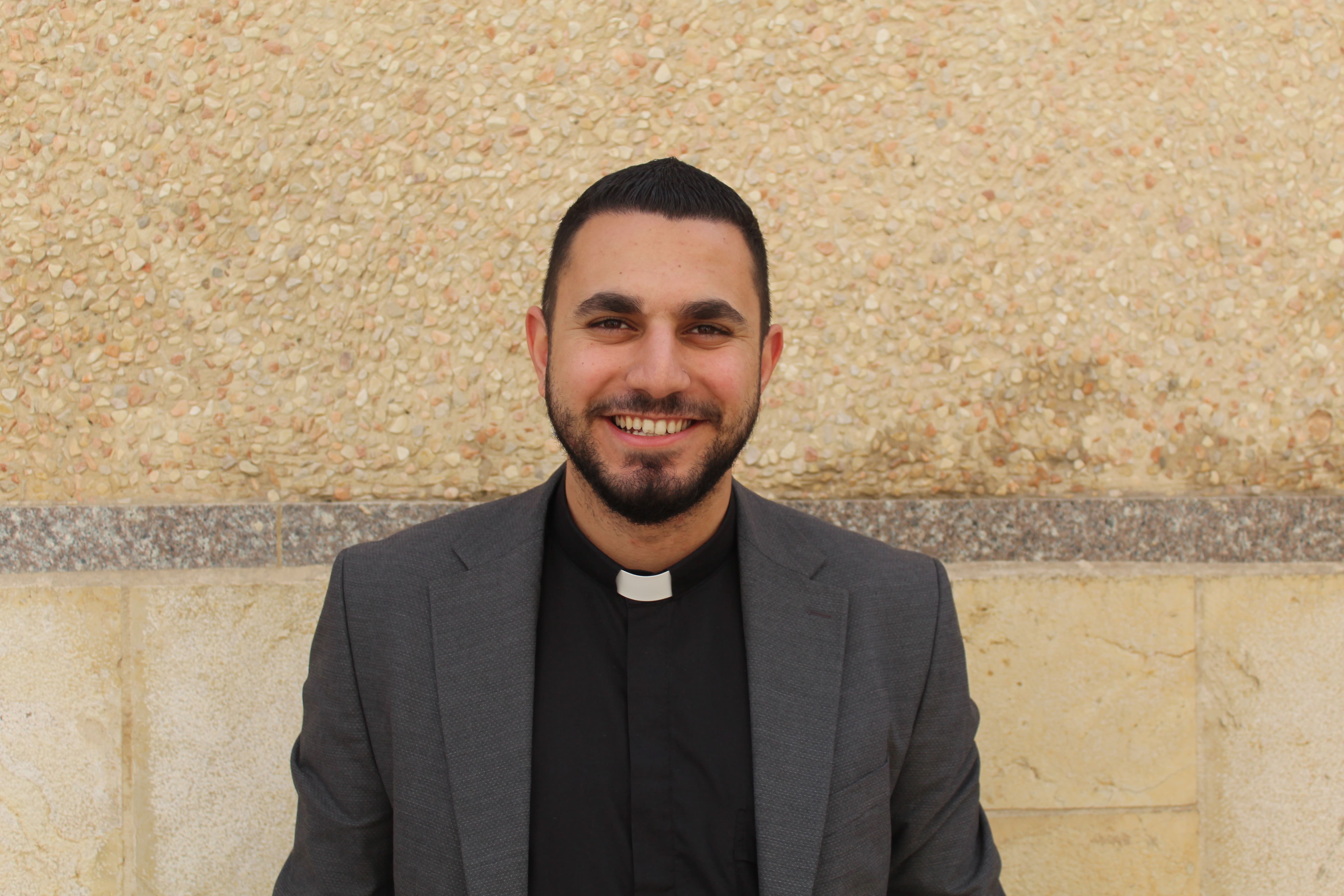
This four-part series kicks off with three important members of the ELCJHL: Bishop Azar, Rev. Sally Azar, and Rev. Rodny Said. These three lead ministry in Jerusalem, which means their work has unique circumstances. Hear from them about the church, the situation on the ground, what it means to lead ministry in Jerusalem as a Palestinian, and the Youth Ministry of the church.
Congregations of the Evangelical Lutheran Church in Jordan and the Holy Land are located in Jerusalem, Bethlehem, Beit Jala, Beit Sahour, Ramallah, and in Amman, Jordan. The latter two congregations were initially established to serve refugees from the Israeli-Palestinian conflicts, especially Lutheran families who were driven from their homes in Lydda, Ramle, and Jaffa. The ELCJHL can properly be called a church of refugees and is grateful for the efforts of the Lutheran World Federation (LWF) toward Palestinian refugees since 1950.
Today, the ELCJHL operates four K-12 schools in Ramallah, Beit Jala, Bethlehem and Beit Sahour. Each year, the ELCJHL schools serve more than 3,000 students. The ELCJHL also has four additional ministries; the Gender Justice Ministry, the office of which is housed in the main offices of the Church of the Redeemer in Jerusalem, the Environmental Education Center located on the Talitha Kumi campus in Beit Jala, the Diaconal Ministry, which is housed in the offices of Beit Ibrahim, and our Youth Ministry.
Located on Muristan Road in the “Resurrection Neighborhood,” the Bishop’s offices of the ELCJHL, housed in the Church of the Redeemer, are only a stone’s throw from the Church of the Holy Sepulchre. The ELCJHL remains a strong Christian presence in these demanding times, providing leadership in ecumenical efforts and offering both spiritual and social services to meet the daily needs of the people.
The ELCJHL has been a member of the Lutheran World Federation (LWF) since 1974 and maintains a “companion” or partner relation with many other churches worldwide. It is a member of the Middle East Council of Churches and was accepted into the World Council of Churches in 2013. The ELCJHL is active in ecumenical affairs and interreligious dialogue locally, regionally, and globally.