Lutheran Beliefs
The Evangelical Lutheran Church in America (ELCA) is grounded in God’s promise in the Scriptures to comfort, accompany, and redeem. As Lutherans, we believe that God works through both law and gospel, calling us to serve our neighbors and providing mercy, hope, and joy through Jesus Christ in modern, often unsettling times.
Faith and Christianity
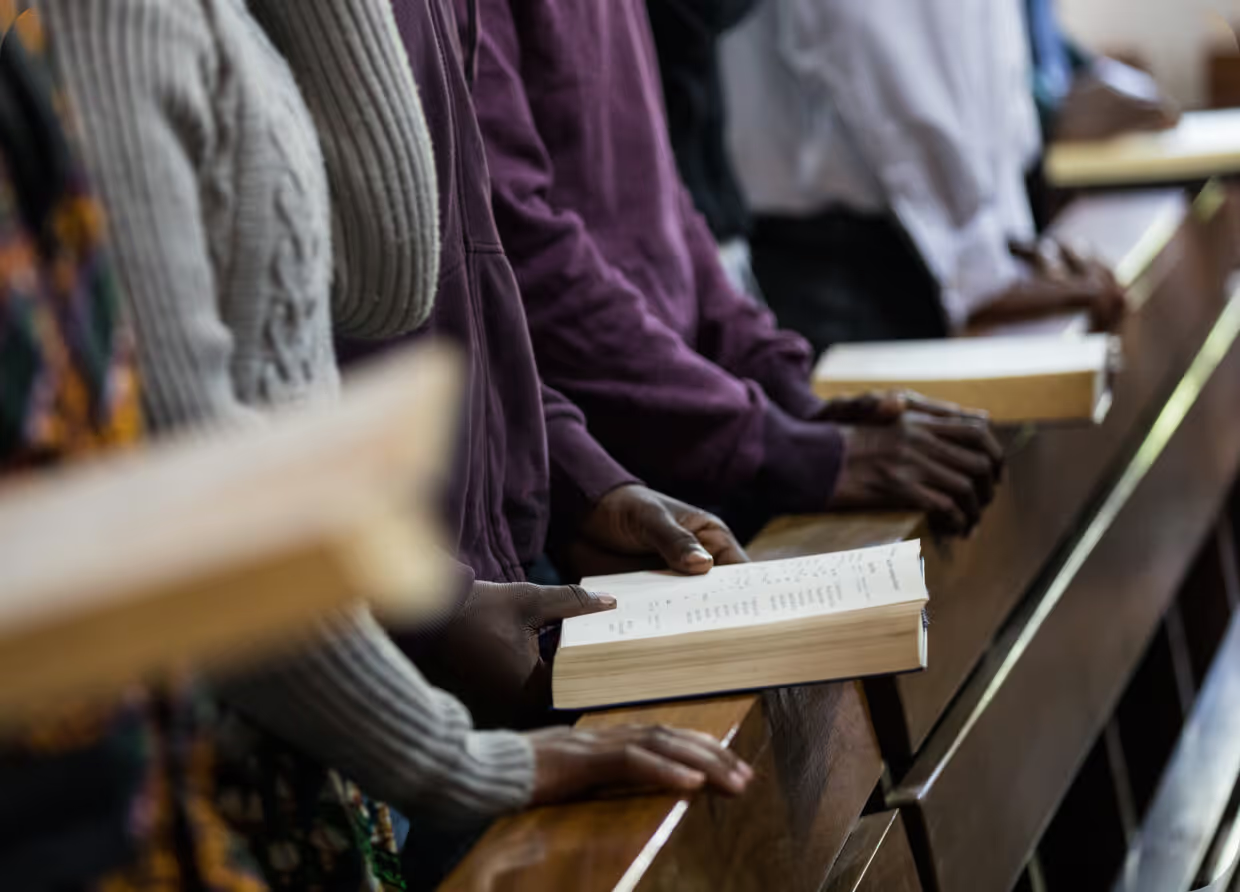
All people seek meaning. This can come in the form of knowledge, relationships, spirituality or organized religion. The ELCA is part of the Christian church. We believe God’s grace and unfathomable love are available to all people as a gift through Jesus Christ. There is no one for whom Jesus Christ did not die. God’s welcome extends to all people, including those who come with questions or doubts.
God is the creator of the world; the giver of life; the source of wholeness, healing and forgiveness; the champion of the poor and oppressed; the power of new life and resurrection. Christians know God as the Holy Trinity: Father, Son and Holy Spirit. Christians believe all people are created in God’s image and loved by God. God’s grace is a gift, offered through Christ and received by faith. There is nothing we do, good or bad, to earn this gift. We call this “good news” or “the gospel.”
Christians believe that God came to us in Jesus Christ, who was both fully human and fully divine. Jesus lived among us, revealing the good news that God loves and saves us by grace. This promise was fulfilled through Jesus Christ’s crucifixion and resurrection, bringing new life. By the gift of grace, received through faith, Christians are transformed and set free to love and serve all others, just as God loves us.
“Faith is the assurance of things hoped for, the conviction of things not seen” (Hebrews 11:1). Martin Luther, after whom the Lutheran branch of Christianity is named, wrote, “Faith is a living, daring confidence in God’s grace.” Faith is more than agreement with statements of belief. It is trust in God through which “a person is ready and glad to do good to everyone.” Scripture teaches that faith is a gift of God. In response to and equipped by God’s gift of faith, we love and serve the neighbor.
Attending Church
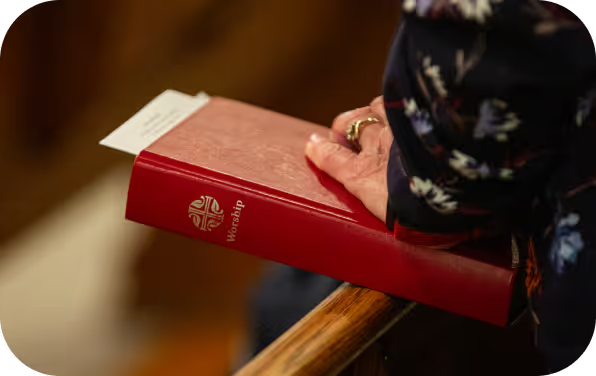
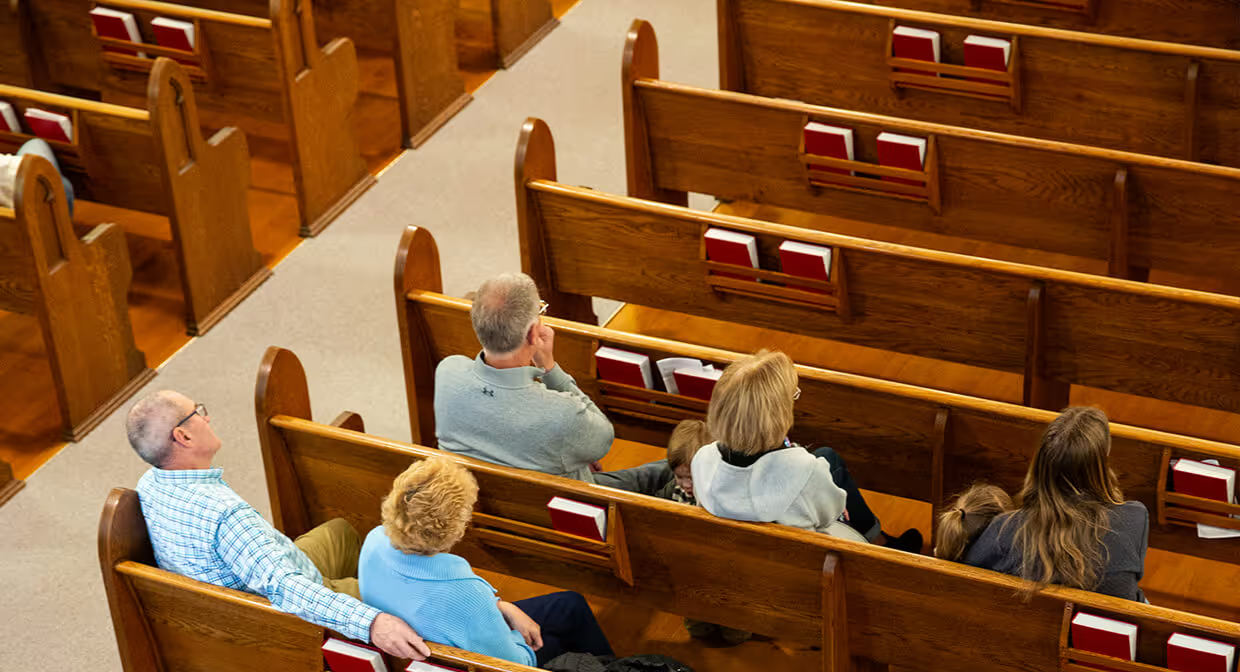
A congregation is a community of faith that gathers for worship, fellowship, learning and service. It’s a place to find connection with others as you experience and share God’s love and grace together. Congregations have many ways to welcome new people who are interested in participating in the life of the community.
Worship styles and languages vary across the ELCA’s 8,400 congregations. Some congregations worship in storefronts, parks or historic church buildings. Some have contemporary music and a praise band, others an organ and a choir. Within that diversity, common elements of worship include sharing the word of God through Bible readings, listening to a sermon and receiving Holy Communion. Find a congregation near you or review your first visit.
People who identify as Lutherans are those who actively practice their faith in the Lutheran tradition or who have joined a Lutheran congregation through membership. Becoming a member is a way of expressing one’s long-term commitment to the life and work of the church. It also expresses a commitment of resources to sustain the work of the congregation, as well as the national and global church.
All types of people and families are welcome! You are welcome as you are! The ELCA teaches that it doesn’t matter what your experience with religion has been or what kind of doubts or questions you might have about faith. We strive to be a church that celebrates diversity and welcomes all people as they are to worship, learn, serve and grow in faith with others.
ELCA Faith Tradition
We believe that all people are imperfect and sinful. We are saved (made right with God) by God’s grace alone, through Christ — not by prayer, mindset, or good deeds. Through the life, death and resurrection of Jesus Christ, God became one of us and took on the world’s sin and suffering to show divine love. We receive the gift of grace by faith and know that we are forgiven even as we struggle with sin. We trust that through Jesus Christ and the Holy Spirit, we are freed to live with gratitude and love.
On Oct. 31, 1517, a German monk named Martin Luther started a movement known as the Protestant Reformation. He insisted that, according to the Bible, salvation could not be earned or bought, which was contrary to church teachings at the time. Luther believed that salvation was a gift and a sign of God’s never-ending love. Luther’s writings are instructive for Lutherans today, but the ELCA as a church is grounded in the Scriptures and the Lutheran confessions in the Book of Concord. The ELCA has repudiated Martin Luther’s anti-Judaic writings and is committed to Lutheran-Jewish relations and to combating antisemitism.
All are welcome here. We are a deeply rooted church that is always being made new. Our roots are in Scripture and a collection of writings called the Book of Concord, as well as in the rich histories of our congregations. We believe that God calls us and equips us through the Holy Spirit to live faithfully in response to the good news-the gospel-and to strive for justice and peace in all the earth. God works through individual humans and human institutions to serve in the world with all its complexities, tensions and ambiguities.
We believe it’s important to have relationships and understanding with other Christian faiths. The ELCA has established full communion with other churches, meaning we share an essential understanding to participate in common mission. We recognize our differences but remain committed to dialogue, learning and mutual respect — even when we disagree. The ELCA is committed to interfaith collaboration for the common good.
The framework for our beliefs began in the 16th century, in what became known as the Protestant Reformation. Lutherans in the United States trace their roots back to the mid-17th century, when Lutherans arrived to the Americas from Europe. The ELCA was formed in 1987 through the merger of three Lutheran churches and is a member of the Lutheran World Federation, a global communion of Lutheran churches in the Christian tradition.
Who is Welcome
We strive to be a welcoming church. We recognize that there are groups and communities of people who have been hurt by their experiences with churches. They have been made to feel that they cannot be their God-given selves in church settings. The ELCA is continually working toward reconciliation and to share our fundamental belief that God’s love and grace are limitless and for everyone.
Sin is a complicated topic because it comes in many forms — individual and communal, through our actions and our inaction. Sin describes the harm, injustice, systemic oppression and evil humans do to each other and the earth. All people, including Christians, fall short. As Lutherans, we believe God judges and condemns how we hurt each other and all of God’s creation. Admitting sins, whether personal or communal, is difficult, but we trust that through God’s grace we are continually forgiven, healed and freed to love others. This conveys God’s unconditional love for us.
Nothing. There is no limit to God’s grace or forgiveness. Through Jesus Christ, God promises to forgive our sin. Though humans can cause pain and suffering, God always offers the possibility of healing and transformation. When we confess our sins, we are reassured of God’s forgiveness, and we respond to that grace by serving and loving our neighbor. Ultimately the gift of grace is a gift from God’s infinite love. God’s gift of faith transforms us to receive and respond to this good news.
God’s love for everyone compels us to stand against anything that harms or divides us, such as injustice, prejudice and systemic oppression. We confess that churches, including the ELCA, have been complicit in this discrimination and division. We are committed to doing the hard work of self-reflection and having honest dialogue with those affected through God’s great work reconciling and restoring the world to Godself and to each other. Learn more about the justice work of the ELCA.
Pain and Loss
God is with us, always. God’s love for us is limitless and persistent. God’s goodness and mercy prevail. Through Jesus, God knows pain and suffering, and we know resurrection. Through faith, we know that God is with us; even amid in the greatest pain and loss.
You might be surprised to learn that Christians today talk about heaven and hell much more than the Bible does. Naturally we wonder what will happen to us and our loved ones after death. The answer to that question lies in God’s hands, not ours. We are freed to serve one another by following Jesus’ example of abundance, justice and peace.
Suffering is part of the human experience. As we move through life, we encounter injustice, loss, fear and pain. Humans make choices that cause each other troubles and sorrows. There are also natural disasters and tragedies. The question of why bad things happen is honest and real. The ELCA doesn’t pretend to have easy answers, but God is with us through all of it. The resurrection of Jesus teaches us hope, and we often experience God’s grace in times of need.
Pastors, deacons and chaplains are prepared to walk with people and provide support in times of loss and grief. The church provides a place for worship and also for counsel. Pastors, deacons and chaplains can be with people in homes, hospitals and other care facilities to offer prayer, guidance and insight. Familiar with the processes of medical institutions and funerals, they are available at times of illness, trauma and death. Find a local congregation here.
Getting Connected
We are a church that rolls up our sleeves and gets to work. Maybe you’ve noticed our members in action, hosting meals through a food pantry, rebuilding homes through Lutheran Disaster Response, providing spiritual care in times of loss, marching for the civil rights of marginalized communities, caring for older adults at nursing homes or teaching children at preschool. The ELCA is also related to quite a few colleges, hospitals, summer camps and many other social ministry organizations.
Each person is created in God’s image. Following the example of Jesus, we’re called to show love and compassion for all people and creation. This call motivates us to respond to immediate needs and to strive for justice. Both service and justice are deeply rooted in Scripture and reflect God’s desire for abundant life for all. The ELCA recognizes that both charitable works of mercy and long-term work toward justice are needed to address systemic issues that cause long-lasting harm.
There are nearly 8,400 ELCA congregations, located in all 50 states and the Caribbean. ELCA Lutherans gather to worship God and to serve neighbors through participation in congregations, campus ministries, outdoor ministries and many other organizations affiliated with our church. College students seeking a faith community can find one through Lutheran Campus Ministry. Click here to find one near you. Come as you are. All are welcome.
Contact a congregation and learn how to get involved with local service activities and ministries through the Lutheran church. Subscribe to newsletters. Donate to ministries that mean the most to you. Participate in “God’s work. Our hands.” Sunday. Advocate for faithful public policy. Follow topics of interest. And join us on social media — Facebook, Instagram and YouTube.
Explore More About the ELCA

The ELCA Churchwide Organization fosters and facilitates this church’s engagement in service and promotes efforts to call and act for justice. Discover how we do this through our Witness in Society team.
Discover our vision and purpose for today and beyond.
Learn how we remain committed to reflecting God’s love with action.
Read how lives and communities are transformed through grace and service.
Learn how the ELCA became a denomination in 1988.