Luther and Lutheranism

Our Faith

Lutheranism began as a reform movement within medieval Europe’s church. In the 16th-century Protestant Reformation, Martin Luther’s witness shaped our beliefs: a living, daring confidence in God’s grace at the center of faith and life.

Our Roots

We trace our roots through the mid-17th century, when early Lutherans came to North America from Europe, settling in the Virgin Islands and present-day New York.

Our Formation

The Evangelical Lutheran Church in America (ELCA) was formed in 1988 by the merger of three Lutheran bodies: the American Lutheran Church, the Lutheran Church in America and the Association of Evangelical Lutheran Churches.  
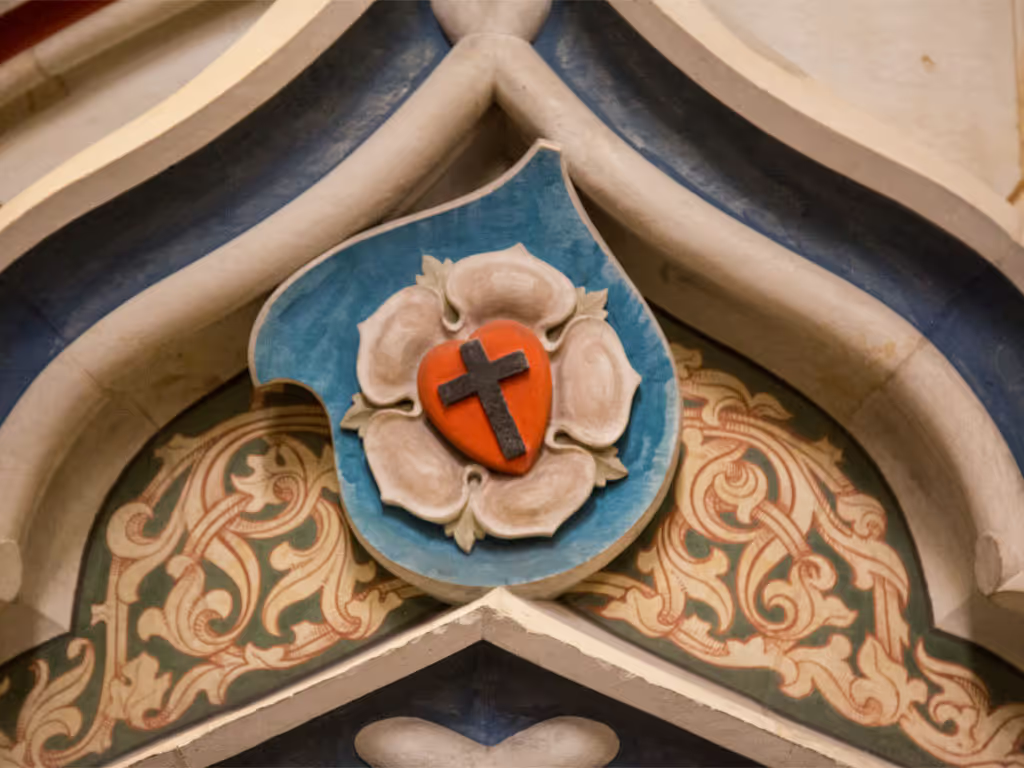
A relief carving, of a cross inside a heart inside a rose petal, sits at a corner in the masonry of the Schlosskirche in Wittenberg, Germany.

Luther and Lutheranism

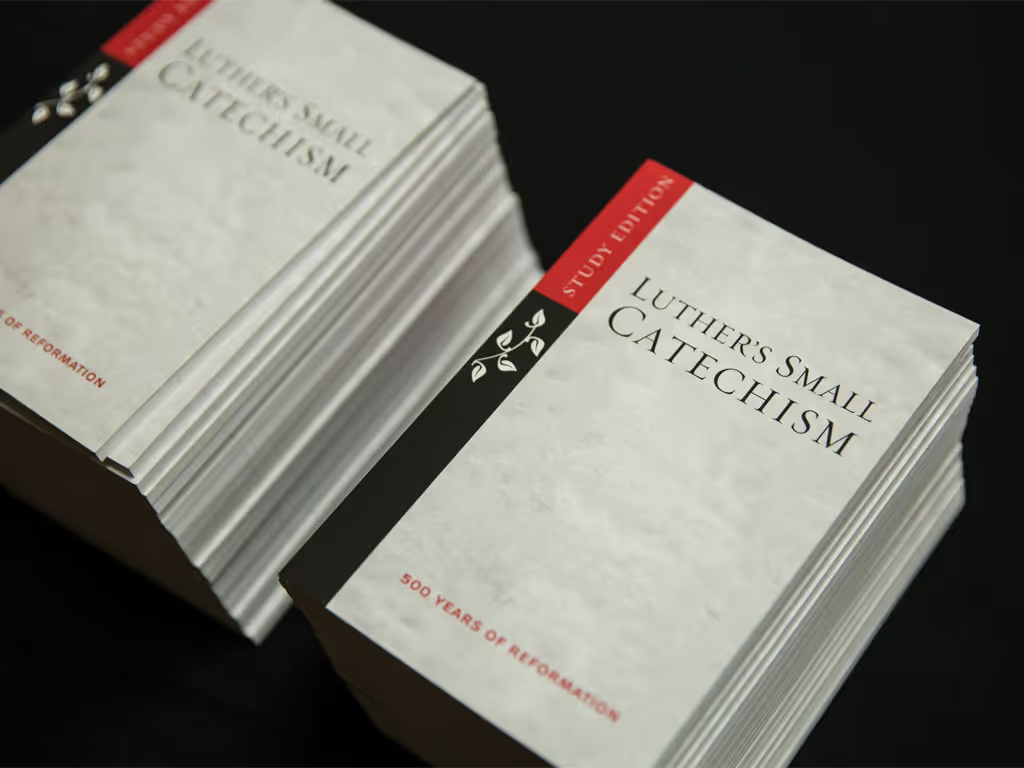
Various books of different sizes and colors on a shelf, with spines facing the camera; most have “Luther” or “Lutheran” in the title.
Amid an age of explorers and artists, Luther grew from a young monk to a junior professor in a small German town. Immersed in Scripture, he was “captivated with an extraordinary ardor for understanding Paul in the Epistle to the Romans.”
Origin Stories

Luther as a Scholar

Mosaic tile in blue and white, with the words “the Spirit” in orange tiles.
In anguish over righteousness before God, Luther wrestled with Scripture until the door of grace swung open. He realized that a “merciful God justifies us by faith.” He felt born anew, finding peace in Christ’s promise rather than his own merit and discovering freedom for love and service.
Born Anew of God

A Living, Active, Mighty Thing

A wooden cross made from thick pieces of wood with holes poked throughout stands in front of a field of lavender with mountains in the background.
Freed by the gospel, Luther challenged indulgence sales that obscured God’s mercy. In 1517, he posted the 95 Theses, sparking a stream of sermons, books, letters and hymns that proclaimed Christ and explored the gospel’s liberating impact on church, conscience and society.
95 Theses

Liberating Implications of Grace

Our Former Presiding Bishops
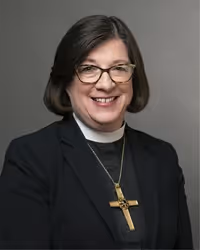
elizabeth_eaton_headshot
The first female presiding bishop of the ELCA, Eaton was reelected to a second six-year term in 2019. She earned a Master of Divinity degree from Harvard Divinity School, was ordained in 1981, served congregations in Ohio and was elected bishop of the ELCA Northeastern Ohio Synod in 2006.
Elizabeth A. Eaton

Presiding Bishop (2013-2025)

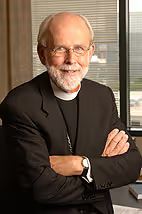
mark_hanson_headshot
Bishop Hanson served two terms as presiding bishop and was known for his evangelical imagination. He served as president of the Lutheran World Federation from 2003 to 2010. Prior to becoming presiding bishop, he led the Saint Paul Area Synod. He has authored several books on faith in uncertain times.
Mark S. Hanson

Presiding Bishop (2001-2013)

george_anderson_headshot
Dr. Anderson was known for his theological depth and historical insight. He was educated at Yale University (Phi Beta Kappa), University of Pennsylvania and Lutheran Theological Seminary at Philadelphia. He was also president of Luther College and Lutheran Theological Southern Seminary.
H. George Anderson

Presiding Bishop (1995-2001)

herbert_chilstrom_headshot
Dr. Chilstrom helped shape the church’s identity after the 1988 merger. Formerly bishop of the Lutheran Church in America’s Minnesota Synod, he brought pastoral, academic and global leadership experience. He held degrees from Augsburg University, Augustana College, Princeton University and New York University.
Herbert Chilstrom

Presiding Bishop (1987-1995)