Church Year Observances

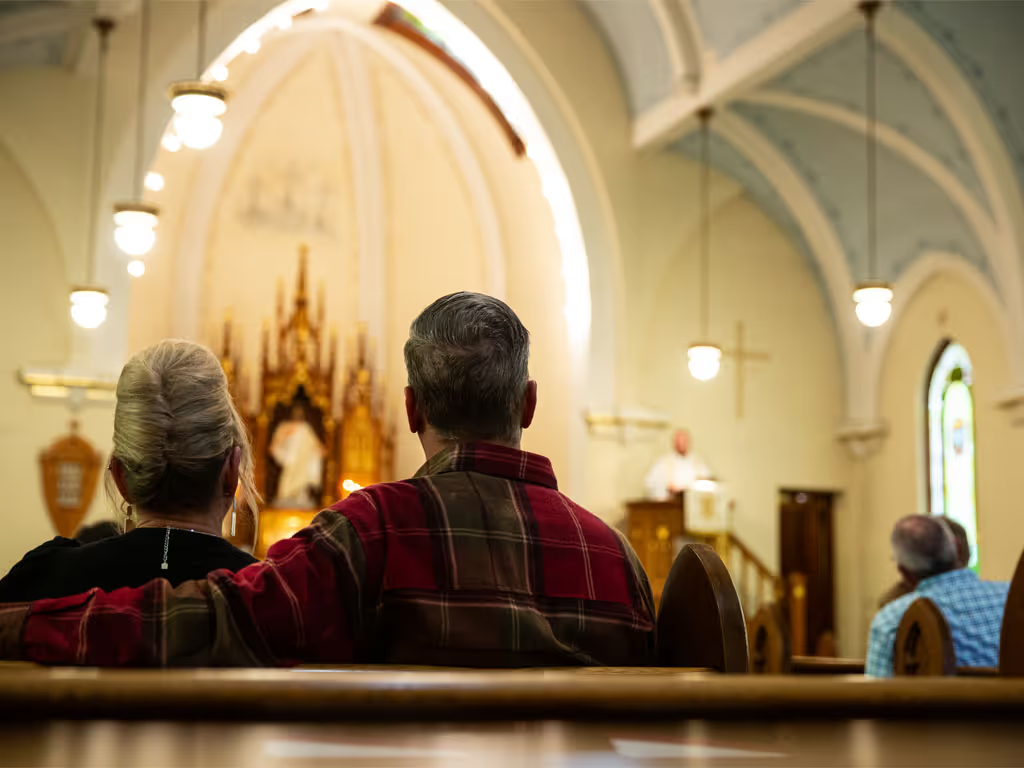
photo from a church pew looking toward the altar with a view of a man and woman with gray hair, the man wearing a red flannel with his arm around the woman as they look forward.
Time is a gift of God’s creation. People order time in various ways, often based on the rhythms of nature. The church organizes time by the church year. It tells the story of God, who is beyond time, acting in history, above all through the life, death and resurrection of Jesus Christ.
Time

Organized by Church Year

Thin brass cross sits on an altar in front of an out-of-focus group of congregants in church pews.
Every Sunday is a festival of Christ, the weekly celebration of the resurrection and the church’s primary feast. Other principal observances include Christmas, Epiphany, Ash Wednesday, Holy Week, the Three Days (Maundy Thursday, Good Friday, Easter), Easter season, Ascension, Pentecost, and Holy Trinity.
Festivals of Christ

Main Observances

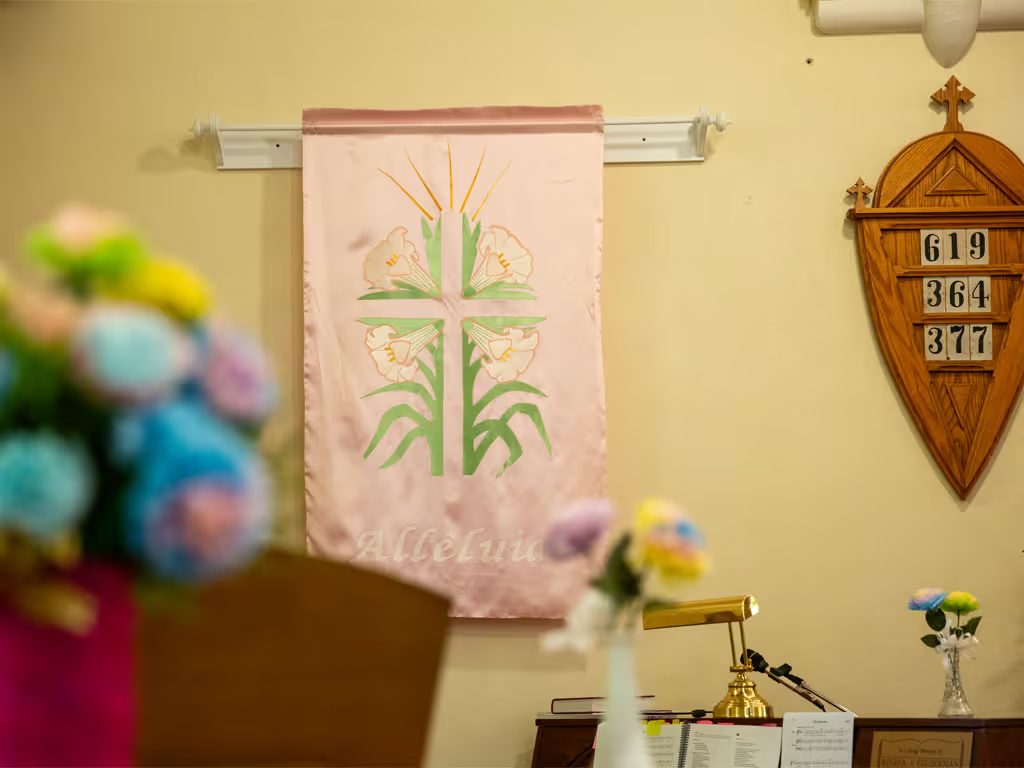
A pink banner featuring a cross outlined by palms hangs on a wall next to a wooden sign with hymn numbers. An out of-focus bouquet of flowers in blue and yellow sits in the left foreground next to the banner.
The church year includes the Christmas and Easter cycles and the times after Epiphany and after Pentecost. Christmas runs from the First Sunday of Advent to Epiphany (Jan. 6). Easter runs from Ash Wednesday (40 days before Easter) to Pentecost (the 50th day of Easter).
The Church Year

Length of Seasons

A hand dips a piece of bread into a clear glass chalice with white wine that is being held by a person wearing a white robe.
Lesser festivals are additional days when we celebrate the life of Christ, the witness of those who accompanied and testified to him and the gifts of God in the church.
Lesser Festivals

Additional Celebrations

Commemorations illuminate various aspects of the church’s life and mission through the lives of women and men who have followed Christ in succeeding generations.
Commemorations

Illuminating Important Lives

The Revised Common Lectionary

Three-Year Cycles
Developed by the Consultation on Common Texts

The Revised Common Lectionary is a three-year cycle of readings that begins with Advent. For each Sunday and festival, three readings and are appointed: a Gospel, an Old Testament reading, a New Testament reading. A Psalm is appointed to be sung in response to the Old Testament reading.

Developed by the Consultation on Common Texts, an ecumenical group of liturgical scholars and denominational representatives from the U.S. and Canada, the lectionary is shared by many North American churches.

Each year centers on one synoptic Gospel (Matthew, Mark or Luke). The Gospel of John appears in all three years and more often in Year B.

Seasons such as Advent, Christmas, Lent and Easter number Sundays sequentially (e.g., “First Sunday of Advent”). In the time after Epiphany and time after Pentecost, Sundays are assigned by calendar ranges (e.g., “Sunday, June 5–11”) and numbered from “Lectionary 1” through “Lectionary 34.” See more lectionary resources here.

Daily readings accompany the cycle, offering a psalm and two scriptures for each day between Sundays. Thursday–Saturday readings prepare for Sunday’s texts; Monday–Wednesday readings reflect on them. From each week’s set, local selections may be made. The complete Daily Lectionary appears in Evangelical Lutheran Worship, pp. 1121–1153.
Lectionary Years A, B and C and More Resources