

Welcome to the ELCA
We are a church that is deeply rooted in tradition and always being made new. We strive to be faithful to the gospel and to work toward more justice and wholeness in the world.
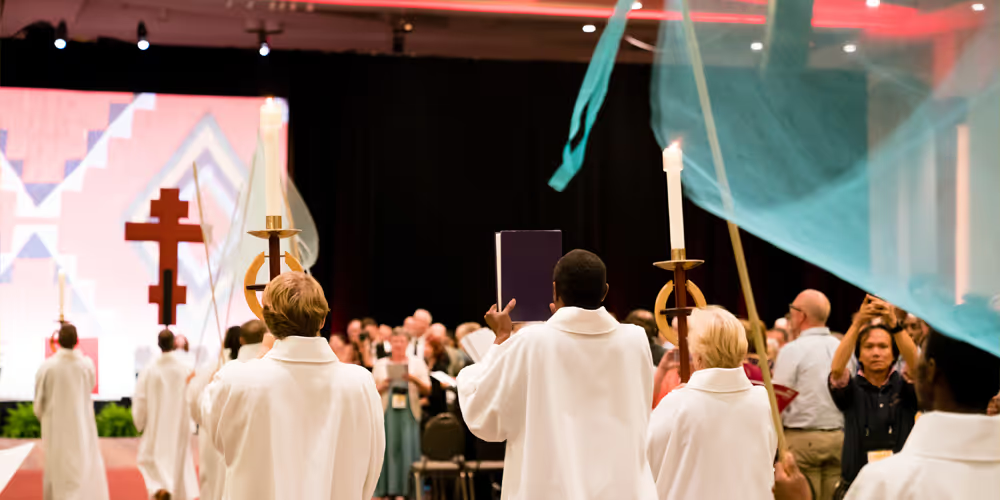

Psalm 131
1 O Lord, my heart is not lifted up;
my eyes are not raised too high;
I do not occupy myself with things
too great and too marvelous for me.
2 But I have calmed and quieted my soul,
like a weaned child with its mother;
my soul is like the weaned child that is with me.
3 O Israel, hope in the Lord
from this time on and forevermore.
Features

Resource
Lutheran Disaster Response is responding to two powerful earthquakes in Venezuela through trusted, long-standing partners in the region.
Publication
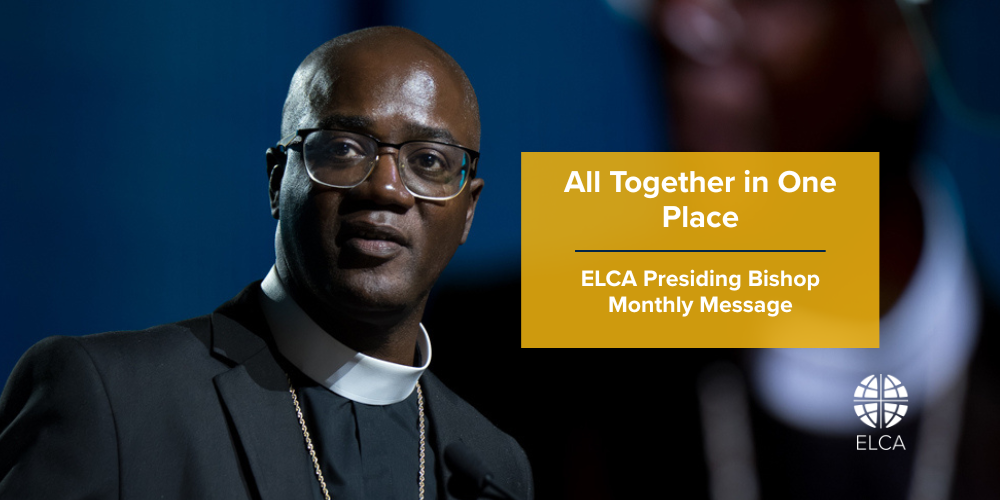
Bishop Curry issues his second in a series of monthly messages that continue through the end of this year, titled "All Together in One Place."
Event
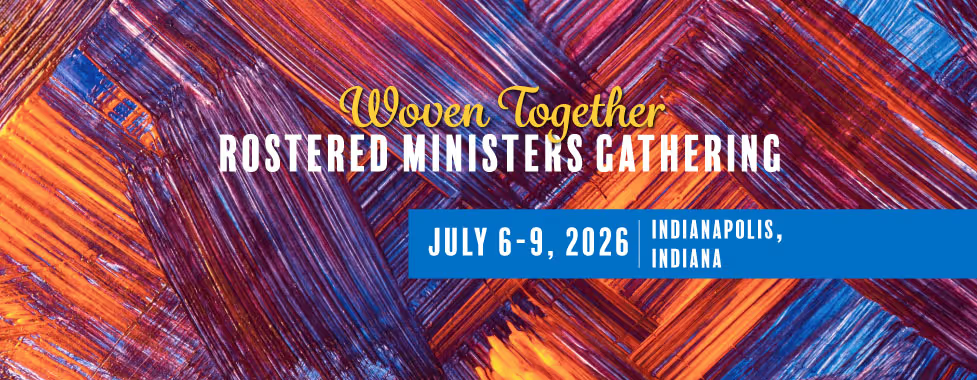
All ELCA deacons, pastors, bishops and candidates approved for call are invited to gather under the theme “Woven Together."
Event
Based on Ephesians 3:20, the triennial event will be in Minneapolis from June 28-July 2, with pre-events MYLE and the tAble on June 26-28.
Event
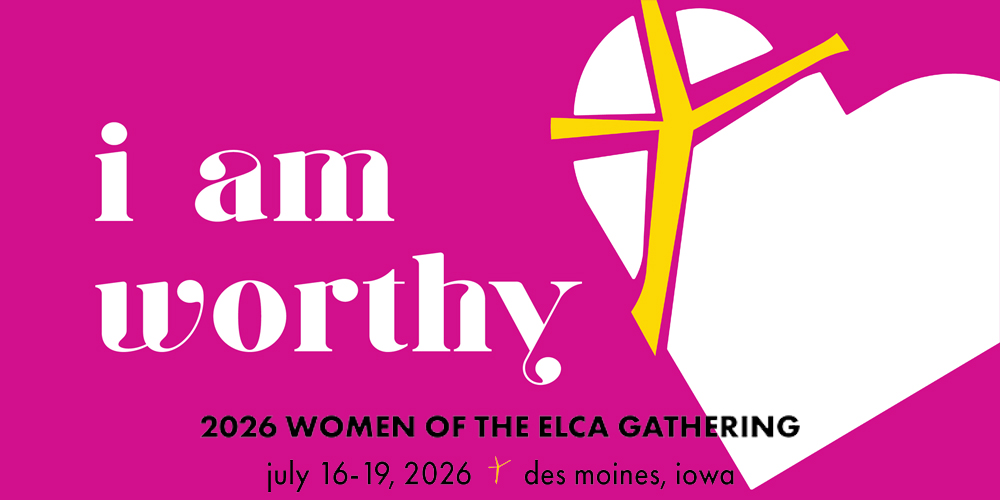
Registration is open for the Women of the ELCA Triennial Gathering, to be held July 16-19 in Des Moines, Iowa.
Publication
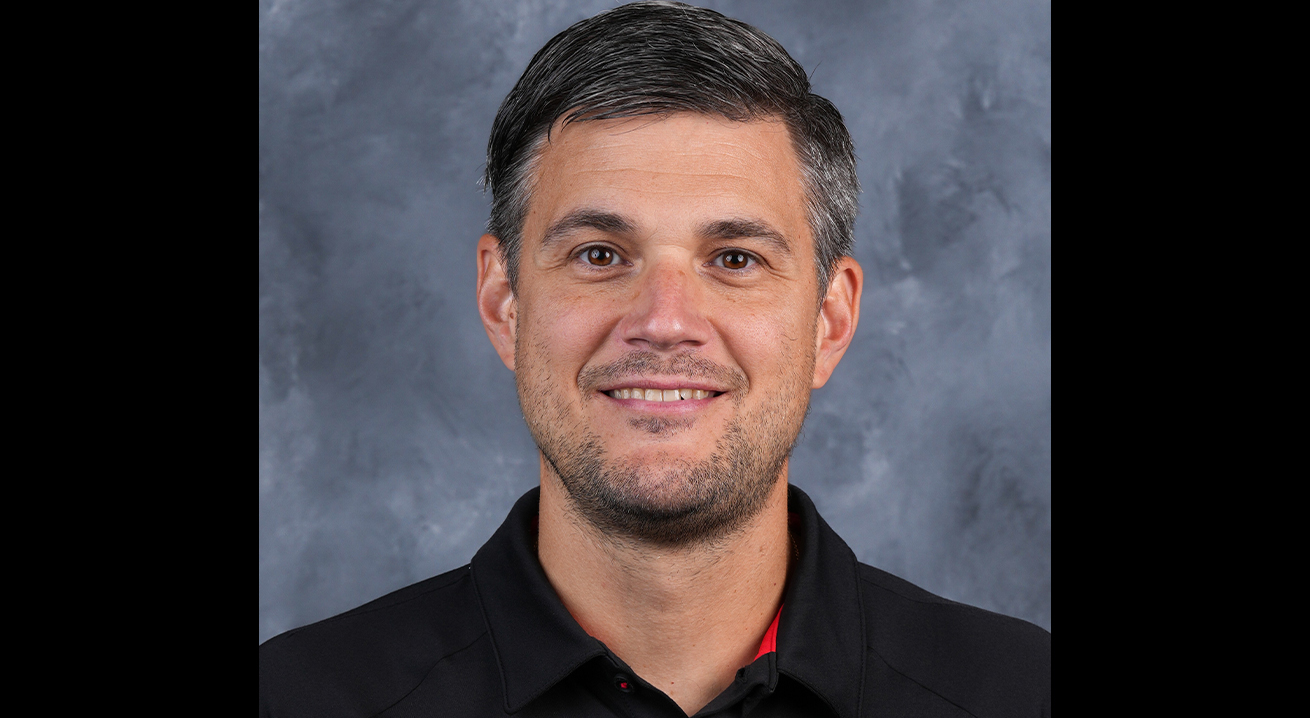
Meet Doug Bennett, head athletic trainer for 2026 Stanley Cup champions the Carolina Hurricanes—and a member of Good Shepherd Lutheran, Raleigh, N.C.
Get Involved

Explore Deeper Into Our Church
The Rev. Yehiel Curry is the presiding bishop. Previously, he served as bishop of the ELCA Metro Chicago Synod. He has chaired the ELCA Conference of Bishops, fostering ecumenical relationships and theological engagement across the Lutheran communion. He and his wife, LaShonda, have three daughters.
We believe that all people are imperfect and are saved by God’s grace alone, through Christ. We believe that through the life, death and resurrection of Jesus Christ, God became one of us and took upon himself the sin and suffering of the world.
ELCA social statements are teaching and policy documents that provide broad frameworks to assist us in thinking about social issues in the context of faith and life. They are meant to help communities and individuals with moral formation, discernment and thoughtful engagement with current social issues.
Give Hope. Take Action. Share Faith.

Your gifts to the ELCA support and sustain the people, congregations, synods and ministries working around the world to realize the hope-filled future God promises.
Our “Exploring Church” website can guide you along your faith journey if you are beginning it or have basic questions.
Whether immigrants, LGBTQ individuals, or others marginalized by governmental decisions, you can support them with your voice.
Discover the many ways where the ELCA helps our youth and families grow in faith and build friendships that last lifetimes.
The ELCA works beyond the US. Our work touches the lives of people globally, caring for creations, ministering to those who seek God, and providing relief where it’s needed.
Explore & Stay Connected



Resources

Considering a vocation in the church or a vocation change? Learn more about ELCA seminaries and colleges along with our discernment tool and app, Journi, to start your leadership journey.

Planning worship for your congregation or group gathering? We offer resources to help you plan worship, including the common lectionary, church year reference points, and observances.

Looking for news releases, stories and newsletters? Our News and Stories section offers the latest ELCA news releases and links to newsletters, publications, blogs and videos.
FAQs
All people seek meaning. This can come in the form of knowledge, relationships, spirituality or organized religion. The ELCA is part of the Christian church. We believe God’s grace and unfathomable love are available to all people as a gift through Jesus Christ. All are welcome here with their whole selves, which include one’s race, ethnic background, past wrongdoing, socioeconomic status, gender identity, sexual orientation, physical ability and legal status. Questions and doubts are welcome.
Martin Luther, after whom the Lutheran branch of Christianity is named, wrote, “Faith is a living, daring confidence in God’s grace, so sure and certain that you could stake your life on it one thousand times. … Through faith, a person will do good to everyone without coercion, willingly and happily; serving everyone, suffering everything for the love and praise of God, who has shown such grace.” Faith is about living in a trusting relationship with God in response to God’s grace.
People who identify as Lutherans are those who actively practice their faith in the Lutheran tradition or who have joined a Lutheran congregation through membership. Becoming a member is a way of expressing one’s long-term commitment to the life and work of the church. It also expresses a commitment of resources to sustain the work of the congregation, as well as the national and global church.
All types of people and families are welcome! You are welcome as you are! The ELCA teaches that it doesn’t matter what your experience with religion has been or what kind of doubts or questions you might have about faith. We strive to be a church that celebrates diversity and welcomes all people as they are to worship, learn, serve and grow in faith with others.
All are welcome here. We are a deeply rooted church that is always being made new. Our roots are in Scripture and a collection of writings called the Book of Concord, as well as in the rich histories of our congregations. We strive to be faithful to the gospel and to work toward more justice and wholeness in the world. We are equipped to live and serve in the world with all its complexities, tensions and ambiguities.