

Flexible and grounded - LuMin Austin

If you happen to walk through the University of Texas at Austin campus on a Tuesday evening, you might see a long line of students snaking around the block at 21st Street and San Antonio. A multicultural and diverse cross-section of the UT Austin community, they’re waiting, no matter the weather, for one of the university’s most popular weekly events: Lutheran Campus Ministry’s Tailgate Tuesdays.
Moving to the front of the line, you’ll find the Rev. Brad Fuerst on the grill, flipping patties with a chef’s ease and an emcee’s enthusiasm. LuMin Austin students walk down the line, taking orders and chatting with folks. More than a hundred students walk away every Tuesday with their bellies full and their spirits high. “It’s the best burger on campus,” says Pastor Fuerst proudly. “The students don’t just get to eat — they get to eat good.”
LuMin provides the Tailgate Tuesday meal as part of its greater feeding ministry for the students, staff and other residents of the UT Austin campus. Forty-seven percent of the student body is food-insecure — a need that goes largely unaddressed by the university. In addition to the Tuesday meal, LuMin provides a free pantry for students where the food flies off the shelves. The students who benefit from LuMin’s feeding programs are far more numerous and diverse than the students who participate in worship or Bible study, but those served by LuMin learn that the campus ministry cares about them — even if they’re not Lutheran or even Christian. “We get a lot of international students,” says Pastor Fuerst. “That opens up a whole new possibility for ministry — opportunities to offer space and support for the Hindu students, Sikh students and others that don’t have a dedicated campus ministry or advocacy group.”

LuMin’s impressive outreach and service come from a deep sense of place on the UT Austin campus and a commitment to the student population. The campus ministry has been located at 21st Street and San Antonio for decades; at one time, that was considered the outskirts of the campus, but today the LuMin headquarters is located among student housing.
“This is a main corridor for students,” says Pastor Fuerst. “We’ve never had to advertise Tailgate Tuesdays; students learn about it when they’re just walking by.” Though the feeding ministry has been active for over a decade, the real turning point came during the COVID pandemic. Students were unable or hesitant to come indoors for a meal, so Pastor Fuerst and LuMin students began serving outside. Word spread, and soon the ministry saw lines of hungry students. Over the past four years, LuMin has experimented with different kinds of food — tacos, spaghetti, you name it. “We asked the students what they liked, what they wanted more of,” says Pastor Fuerst. “The clear winner was burgers.” Pastor Fuerst is now raising funds to upgrade LuMin’s kitchen so it can be commercially certified, increase its capacity and serve hundreds of burgers a week.
LuMin Austin can dream big partly because it’s unencumbered by a big, old building that demands time and money. Earlier the ministry inhabited a more traditional church building that it shared and co-managed with the campus ministry of the Lutheran Church–Missouri Synod. But in 2008, the city of Austin, hoping to consolidate student housing within the walkable UT campus area, rezoned much of the west campus. Suddenly the land on which the church sat became a hot commodity, and LuMin had an opportunity to trade in the building for a large source of income that could create and sustain ministry.
The Rev. Paul Collinson-Streng, then pastor of LuMin Austin, describes the discernment process as collaborative, faithful and extensive. “We were considering several options. Do we sell and move to a landless ministry? Do we develop? Do we hang on to the building?” Ultimately the deciding factor was LuMin’s sense of place and service. “We were one block from campus, and we felt it would be a shame to give that up. If we sold the land, we would no longer have an anchor in the community we’re called to serve. So then the discussion became what was the ‘highest and best use’ of the land for our mission — and housing was the answer.”
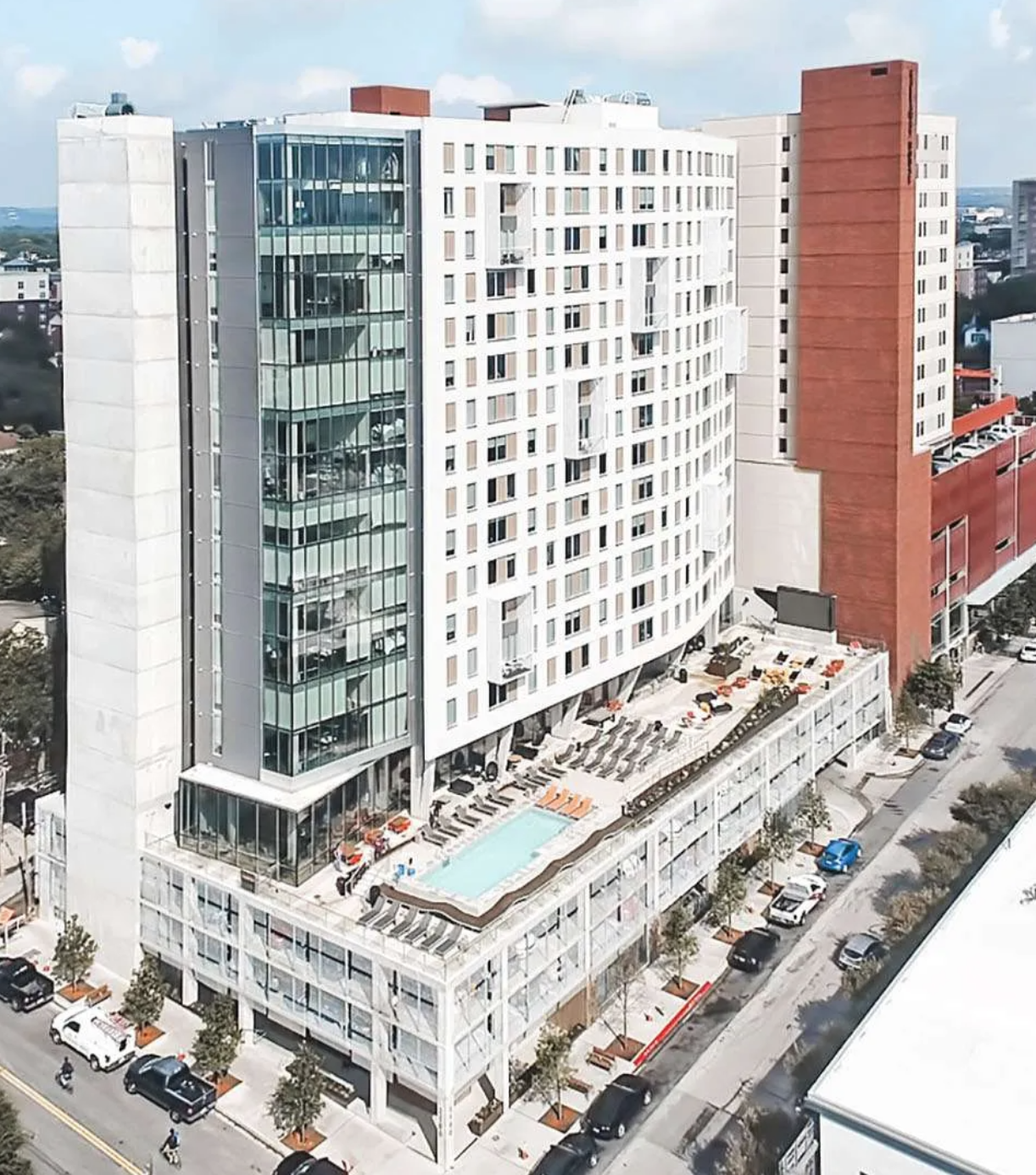
LuMin convened a board of local volunteers with experience in real estate sales, real estate law and asset-management. It involved LuMin students, who had a voice in the discernment and development process. The ministry researched several student-housing developers and found a partner that fit its vision: the Scion Group, a property development and management company in Chicago. Together they launched construction of a high-rise building that could house more than 500 students. Though LuMin holds the property title, it has ground-leased the land to the Scion Group, which pays it $100,000 a year and handles all property management and upkeep.
The deal allowed LuMin Austin and the Missouri Synod ministry to lease back space on the ground floor, with full design and management oversight of their spaces. They moved into the new building in 2016, six years after LuMin had begun the discernment process. The location is a valuable asset: the ministry has a neutral, flexible and welcoming space, close to the student population, that can easily be configured into a worship setting, a dining room, a food pantry, a “hang out” location and much more. Built for the students, it transforms along with the campus community, serving unimagined needs as they arise.
More than a decade after the deal was struck, the foresight of Rev. Collinson-Streng and the LuMin board has paid off. Pastor Fuerst is thankful for the flexibility and capacity that the development deal created for LuMin Austin but is also considering how to set up the campus ministry for success when it renegotiates its lease. “There isn’t a lot of affordable housing in this building,” says Pastor Fuerst. He wants to make sure that the deal increases the number of affordable units for students, even if that means that LuMin will receive less money in the annual ground-lease payment. “This place has to be a manifestation of the kingdom that Christ describes in Luke. If the space does not reflect that sermon, then it’s just a cash cow for the church and not for the glory of God.”
In the years since leaving LuMin Austin, Rev. Collinson-Streng has served congregations in Virginia and Maryland that have also been interested in property development or other creative solutions to property challenges. “I would encourage churches to focus on visioning,” says Rev. Collinson-Streng. “Meet regularly, study Scripture, and pay close attention to what’s happening in the community around you so that you can see how you can meet those needs.” Most important, “Be open to where the Spirit leads, and don’t get too attached to one specific outcome.” Being flexible and staying grounded have been keys to LuMin Austin’s success.
Property Stewardship Lessons
- Development projects take time! Churches need to conduct years of visioning and predevelopment work before they break ground.
- Pay attention to your place in the community. How are you anchored, and whom can you serve?
- Don’t skip discernment of your values! Having a clear vision will help you seek and find the right solution and partners.