

Going it together - Common Grace

Along a residential street in the Eastmorland neighborhood of Madison, Wis., sits a triangular plot of land, nestled inside three intersections. For decades, the only features of that island have been a small church building and garden, but soon the land will host a community center and an apartment building with 24 units of workforce housing. Common Grace — a congregation created when Lakeview Moravian Church merged with Zion Evangelical Lutheran Church — is leading this collaborative initiative, backed by advocates, neighbors and allies from across the city. This inspiring vision for a small corner in Madison is not simply a project the community has bought into; it is a project that the community helped create.
Both Lakeview Moravian and Zion Evangelical Lutheran started in the 1950s as the neighborhood was growing. But when the Rev. Staci Marrese-Wheeler arrived as the new pastor of Lakeview Moravian, she saw a church on the brink of closure. “I thought I was coming to be a hospice pastor,” she says. “There were 40-something members, and I performed 20 funerals in my first year.”
The congregation was struggling, but the neighborhood was bustling. The church building sat across from a growing elementary school packed not just with students but with community events. The neighborhood library was the busiest branch in the city and turned groups away because it had no space available. “I remember my bishop telling me not to just sit around in the church office,” says Pastor Marrese-Wheeler. “He said, ‘You have collaborative neighbors — you should go meet them.’” Pastor Marrese-Wheeler began conversations with teachers, theater groups, the alderman and anyone else she could get an appointment with. Soon the Lakeview Moravian building was as busy as the other community spaces, with a bilingual preschool, theater troupes, craft organizations and a variety of service events such as a passport fair.
“I remember my bishop telling me not to just sit around in the church office,” says Pastor Marrese-Wheeler. “He said, ‘You have collaborative neighbors — you should go meet them.’” - The Rev. Staci Marrese-Wheeler
In 2019, after three years of development work, a looming financial cliff had forced Zion to walk away from its plan to develop affordable housing. The two congregations saw how much more they could accomplish together and began to explore what sharing a building and ministry might look like. In 2020, Zion moved into Lakeview’s building, and the congregations merged. The members quickly realized that they could have more impact in their neighborhood as a community center than as a traditional church. Common Grace established the nonprofit Eastmorland Community Center to work with the shared-space partners and find funding to support their work.
The center provided partners with a voice in decision-making and a say in how the building could continue to serve the neighborhood, which helped to connect the project with secular organizations across the city. Pastor Marrese-Wheeler and the other Eastmorland Community Center leaders began applying for grants to fund the building’s upkeep and programming so that community groups could keep accessing it for free. “I wrote every denominational grant I could find, and then every community grant that could fit our programs,” says Pastor Marrese-Wheeler said. Along with funding, the grants helped Eastmorland Community Center expand its network of allies and advocates across Madison, and more people became invested in a small church on a little, triangular island.
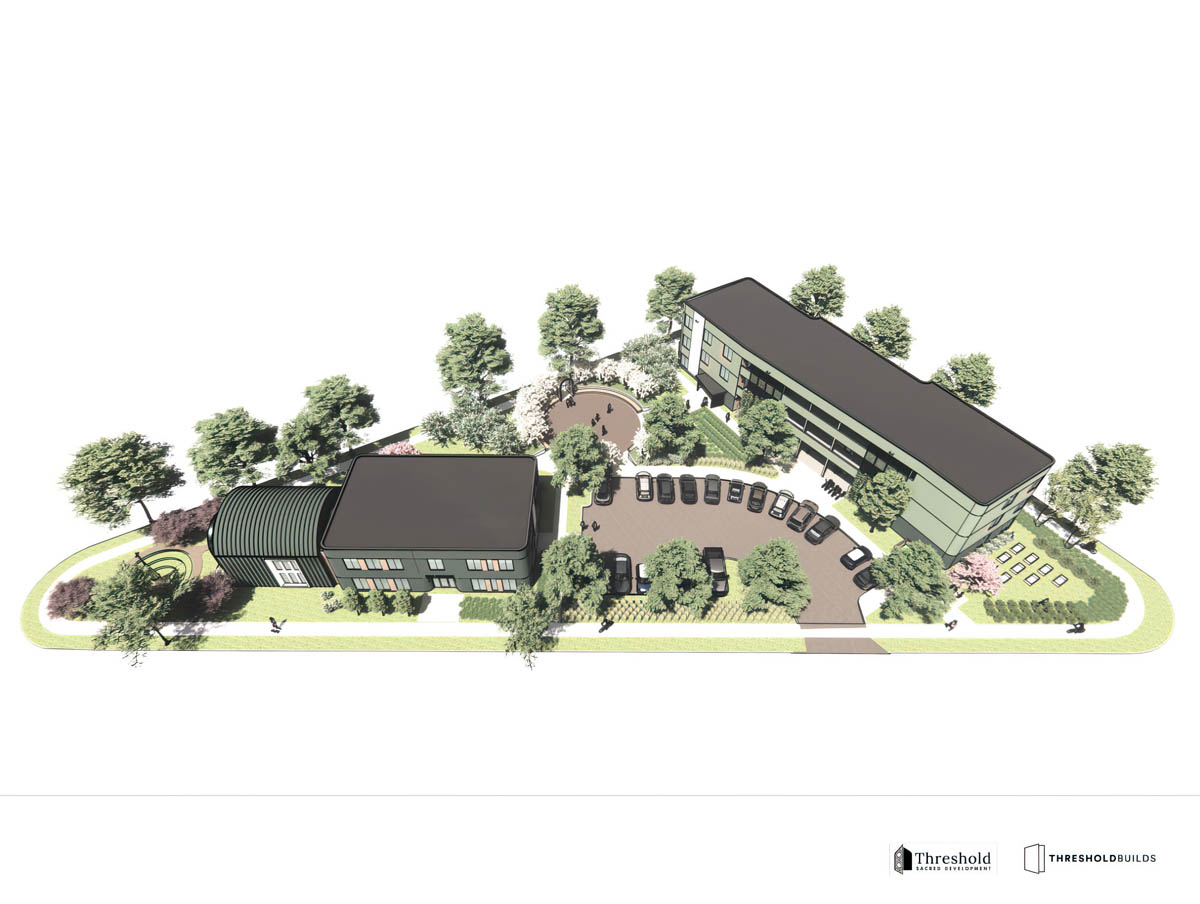
In 2021, the members realized that the community center needed a new building to continue serving the neighborhood. Zion had come to the merger with significant funding from selling its property, and Common Grace started exploring how that money could seed a larger project. Knowing that any development project needed to be done for and with community members, the leaders of Common Grace began consulting everyone they could about developing the property. Having diverse and numerous advocates is essential for any new development because these are complicated projects to get off the ground, especially for small congregations.
That year, congregational leaders met with their alderman to discuss how Eastmorland Community Center and Common Grace could expand their impact. “You have the land for housing,” he told them, “and that’s what this community needs.” Though affordable housing seemed like a big lift — especially for those Zion members who remembered the halted development project — Common Grace and Eastmorland Community Center considered the suggestion.
Common Grace participated in two citywide opportunities for congregations to rethink their property and community presence: Awakened Dane and Oikos Accelerator. Through these programs, the dream of a new community center with affordable housing became possible. The Oikos Accelerator program was led by the Rev. Mark Elsdon, a co-founder of the nonprofit economic development group Rooted Good and a local minister who had successfully transformed a campus ministry site into affordable housing. Rev. Elsdon connected Common Grace to Threshold Development, a firm guided by Islamic values, which immediately saw the project’s potential to do good. He also connected Common Grace with Wesleyan Impact Partners, a Methodist group that is now providing the church with an $850,000 loan. Other partners include the city, which is providing a $400,000, no-interest loan for the project, and the UCC Church Building & Loan Fund, which is helping Common Grace and Eastmorland Community Center to raise the remaining $1.5 million for the project (they have already raised over $700,000 from congregational and community donors as well as two large foundation gifts).
Having explored affordable housing before, the former members of Zion Lutheran knew how to navigate the bureaucracy and politics for this kind of development project. The alderman’s office, already invested in the idea, shepherded the project through the city’s planning department. The church building was slated for demolition in August 2025, and construction of the new campus, with its apartments and community center, is to begin later in the fall.
Pastor Marrese-Wheeler says that she is astonished by what Common Grace has accomplished in such a short time. “It hasn’t been easy, by any means, but everything has fallen into place. … We just have to trust God’s goodness and abundance.” That abundance has come from unexpected places — municipal leaders, ecumenical and interfaith partners, and residents of Madison, who are often cautious about organized religion. The community is invested in the vision as deeply as the congregation is. When asked what advice Common Grace might offer other congregations that are dreaming of property transformation, Pastor Marrese-Wheeler emphasizes the importance of partners and advocates. “You can’t go it alone,” she says. “Look outside your walls, outside your neighborhood, outside your denomination.” Together we can make big dreams become reality.
Property Stewardship Lessons
- Build partnerships. Pool resources from multiple congregations and organizations to achieve bold visions and big dreams.
- Cultivate relationships with local leaders. Their connections with city government and other institutions are essential to successful development.
- Explore beyond your denomination. Many development and funding partners share your values even if they don’t share your name.