

Leaving the building to come home again - All Saints Lutheran

When the Rev. Kari Niedermaier first arrived at All Saints Lutheran Church in Port Orange, Fla., she heard something deeply honest and human: “This building is so important to us.”
The building held memories — baptisms and funerals, laughter in the fellowship hall, prayers whispered in quiet pews. It represented stability in a changing world. For a congregation rooted in Port Orange, many of whose members had loved this place for decades, the building was more than bricks — it was belonging.
Yet alongside that love, there was grief. The average age of the congregation was 72. There was talk of a “lost generation.” There was quiet wondering: Who are we becoming? What comes next?
Instead of beginning with programs or strategies as the congregation members were discerning what was next for them and their property, Pastor Kari invited the congregation into reflection: “Where do you see God in your daily life?”
The answers came: in nature, with pets and in places of belonging. These responses revealed that God was already present beyond the sanctuary walls. The question became: What would it look like to join what God is already doing?
The congregation members took a courageous next step. They decided to determine the future of their building by leaving it. Once a month, they closed the sanctuary and worshiped in the community — at a local park, in people’s homes and in an assisted living facility.
In the park, neighbors experiencing homelessness joined in worship, and “welcome” became more than a word — it became a lived practice. Congregation member Lois Patterson reflected, “We wanted to include all our neighbors in worship.” Their community deepened through house church connections and expanded through worship at the assisted care facility.
As the members experienced church beyond their building, they heard clearly that they were being called to stay on their property. But they had a new vision of what is possible for their community. A new question emerged: What is this space for now?
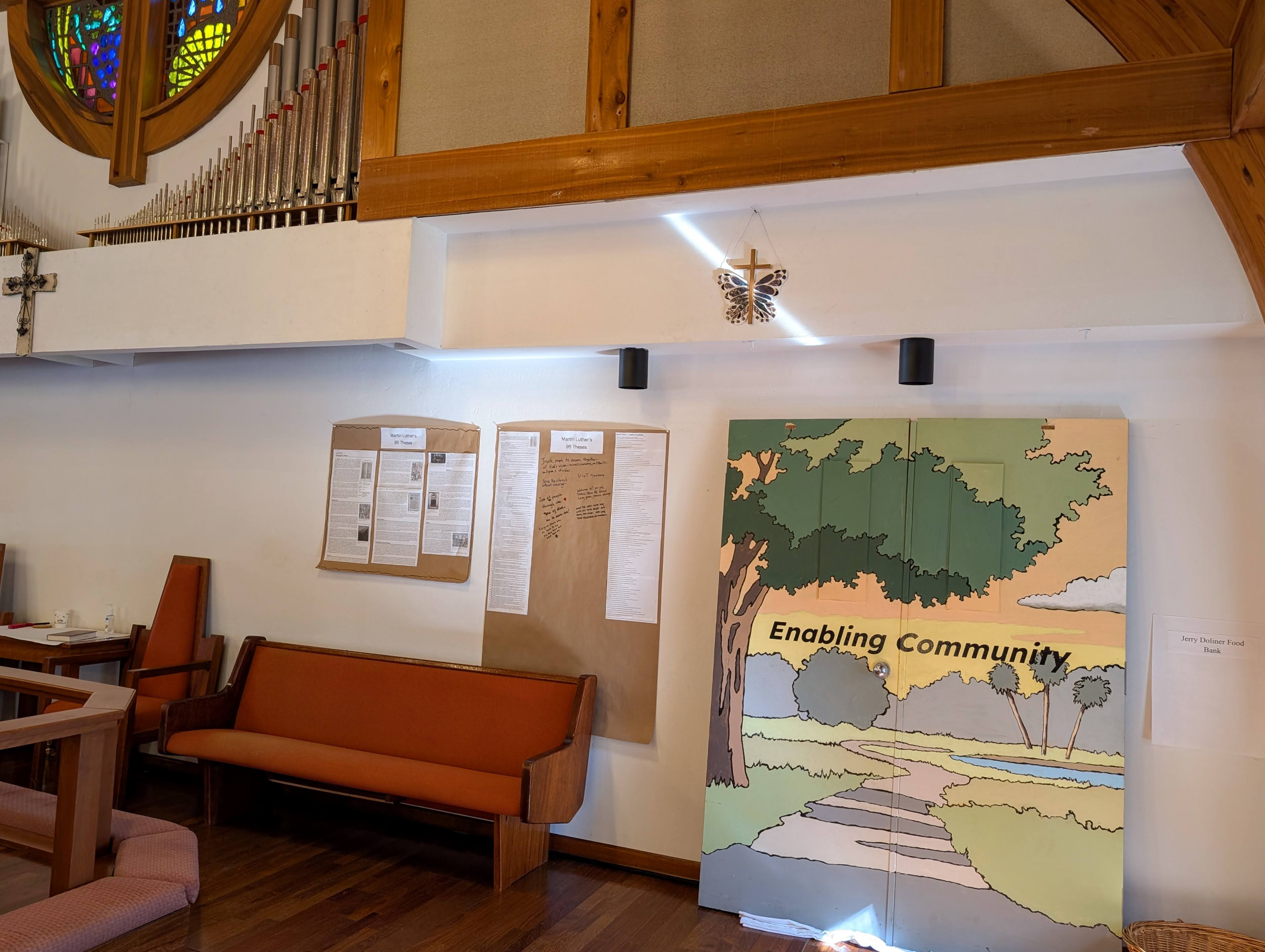
Upon their return to the sanctuary for worship, they began to imagine what might be next for the property with an opportunities and vulnerabilities exercise. This exercise clarified which parts of the building were a necessary part of the congregation’s day-to-day activities and which were not.
Throughout the process, Pastor Kari invited the congregation into rituals of letting go. To imagine what is possible, they would need to let some things go. Pastor Kari shared the necessity of acknowledging the grief amid change, reflecting, “Change management is another word for death and resurrection.”
It was essential to the members that their new partners in whatever came next align with their values. They began their search for a mission partner.
Through a relationship with a local real estate broker, they were introduced to Able Academics, a school that provides education and therapy for neurodivergent students. Able Academics specializes in providing applied behavior analysis (ABA) therapy within a structured school environment. Its small class sizes allow for personalized academic support of each student’s needs.
Able Academics was searching for a home. All Saints had underused space. As they got to know one another, it became clear their values aligned — care, dignity, inclusion and healing. The space was perfect for the program, with its access to an outdoor play area, classrooms and community spaces.
In June 2023, the congregation began looking at the possibility of moving Able Academics into All Saints’ education wing. Congregational leaders sought out engineers and architects for advice. They began working with a contractor in winter 2023. As with any construction project, there were some bumps in the road, and the project was completed in March 2025.
The process required perseverance and partnership. George Carrington, a congregational leader, shares, “The partnerships we have built are the success story. Look at all the relationships we have built.” The support of municipal leadership was instrumental to the completion of this project.
Pastor Kari calls these connections “relational evangelism.” She encourages congregation members not just to invite folks to be involved in their ministry but to name where they have seen God at work, inviting partners to come with them to experience it too. Knowing your own story is essential for bringing partners alongside.
Today the campus is alive with activity. Able Academics now occupies the space and helps sustain the property. During the week, the classrooms are filled with laughter and learning. The church president reflects, “The energy in this church has changed. So many people step up to help now. People’s faith has grown. It has made us pull together and love working together.”
The partnership has grown into a shared life together.
Weekly story time takes place in the sanctuary. Students, families and staff helped shape a “prayerground” area designed to be welcoming for children of all abilities. Every month, students participate in crafts with congregation members.

During Teacher Appreciation Month, congregation members connected with Able teachers, offering small gifts and prayers. This relationship led to the creation of a shared prayer box in the common gathering space where anyone in the community can offer requests.
The congregation hosts a coffee cart during student drop-off, creating opportunities to connect with families. All are invited to monthly community meals.
Through these relationships, Able staff and families have experienced the congregation’s welcome, and some have become part of the worshiping community. Neurodivergent children and adults now participate fully — serving meals, carrying the cross in worship and helping shape how the space is used.
This partnership has expanded All Saints’ understanding of who belongs, and it has invited newcomers in as a result. Carrington shares that he and his wife were just passing through the area and found All Saints online. They decided to check it out. What they found was a welcoming community where their autistic son thrived, so they stuck around the area and have become instrumental leaders in the congregation.
It is a reminder of what can happen when a congregation remains open to the movement of the Spirit and attentive to what God is calling it to do now. Sometimes it takes leaving a familiar space — and returning with a new perspective — to imagine what is possible.
Property Stewardship Lessons
- Buildings are tools for mission, not the mission itself. Exploring how your property can contribute to the work God is already doing brings new life, new partnership and new ministry to the church.
- Letting go can create space for new life and purpose. Through intentional reflection practices, the congregation embraced change as a form of faithful stewardship.
- Strong space-sharing partnerships are founded on mission and value alignment. Churches and their space-sharing partners should see the arrangement to enhance and expand each other’s impact on a shared vision.